
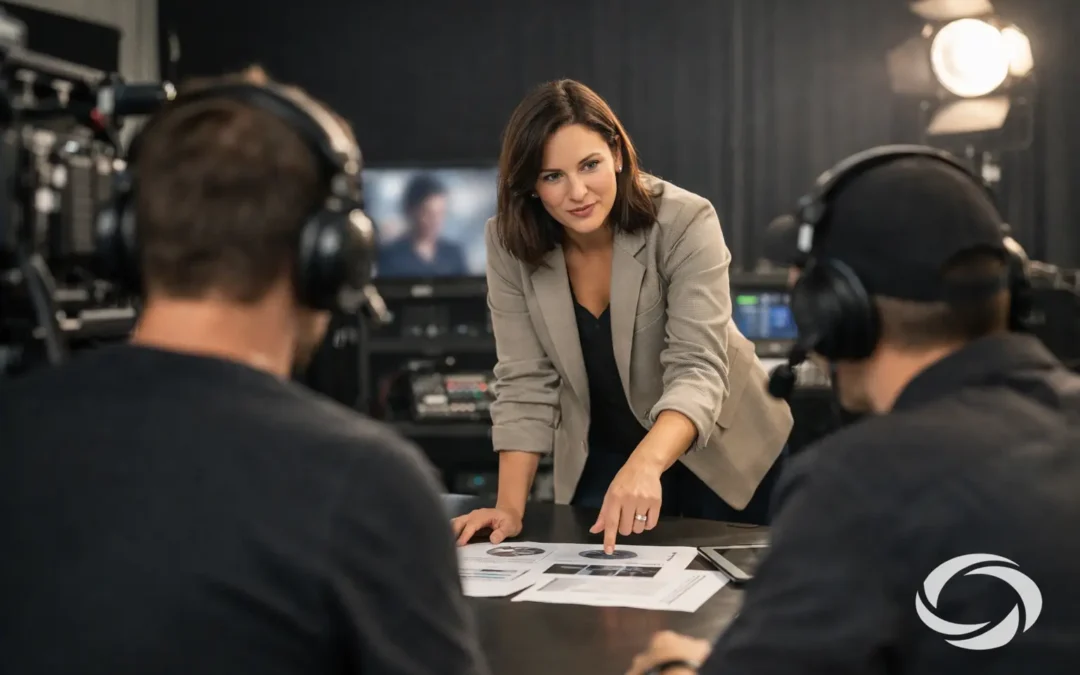
Why you should let 2GO brief the AV Team:
A good event can lose momentum fast when the sound is late, the screen format is wrong, or the lighting does not match the room. That is why knowing how to brief audiovisual team members clearly is not a small planning detail. It directly affects timing, guest experience, and how professional your event feels on the day.
For international clients planning an event in Portugal, this matters even more. You may be coordinating remotely, working across time zones, and relying on local suppliers to execute exactly what you approved. A clear AV brief reduces back-and-forth, prevents assumptions, and gives your technical team what they need to deliver without guesswork.
Why the AV brief matters more than most clients expect
Many clients think audiovisual is mainly about equipment rental. In practice, the team is managing a live environment with timing, power, room conditions, presenter needs, and audience expectations all happening at once. If the brief is vague, the team has to fill in the gaps. Sometimes that works. Often, it leads to avoidable compromises.
A strong brief does two things. First, it gives the AV team the practical information required to build the setup properly. Second, it aligns everyone on the real purpose of the event. A wedding speech needs a different technical approach than a product launch. A conference panel has different priorities than a birthday party with live entertainment. The same microphones and speakers can be used in very different ways depending on the outcome you want.
How to brief audiovisual team members with the right information
The best briefs are clear, specific, and realistic. They do not need to be overly technical. In fact, most clients should avoid trying to translate their needs into technical language unless they are completely sure. It is better to explain the event clearly and let the AV team define the most suitable solution.
Start with the basics: what the event is, where it is happening, when it starts, how many guests are attending, and what kind of audience experience you want. If this is a corporate event, explain whether the priority is presentations, hybrid participation, brand impact, or networking atmosphere. If it is a wedding or private event, explain which moments require technical support, such as the ceremony, dinner speeches, first dance, or live music.
Then move to the running order. This is where many briefs become too general. Saying “we need sound and lights for dinner” is not enough. The team needs to know what happens during dinner. Will there be background music only, or several speeches? Is there a video to play? Will the lighting need to shift later for dancing? Timing details help the team plan transitions instead of reacting to surprises.
Room information matters just as much. A ballroom with low ceilings creates different lighting options than an outdoor terrace. A historic venue may have power limitations or rigging restrictions. A modern conference room may look easy on paper but still require careful cable routes and screen positioning. If you already have floorplans, photos, or venue rules, include them early.
Be clear about content, not just equipment
One of the most common mistakes in AV briefing is focusing only on gear. Clients ask for two screens, four microphones, and speakers for 150 people, but they do not explain what will actually be shown or said. Equipment choices only make sense when tied to content.
If you have presentations, say who is presenting, what format the files will be in, and whether speakers are controlling slides themselves. If you have video content, mention duration, resolution, sound requirements, and whether there are subtitles for multilingual audiences. If there will be live performances, explain the type of act, the number of performers, and any special technical requests already raised by the artist.
This is especially important for destination events in Portugal where international teams may arrive with last-minute content updates. If your AV supplier knows that a US-based keynote speaker is likely to send revised slides the night before, they can prepare for that. If they assume all content is final three days in advance, friction starts early.
What your audiovisual team needs to know about people
Events are run by people, not just schedules. A solid AV brief should identify the main decision-maker, the on-site contact, and anyone else who can approve technical changes during setup or live show. Without this, simple decisions can stall.
It also helps to flag who may need extra support. Some presenters are confident and quick. Others need reassurance, a comfort monitor, or a full technical rehearsal. A wedding couple may want a very discreet setup, while a brand team may want visible production value. Neither approach is wrong, but the AV team should know the expectation in advance.
Language can also affect the briefing process. For international events, be explicit about which parts of the show are in English, Portuguese, French, or another language. This can influence cueing, screen content, and how technicians coordinate with hosts and speakers.
Budget matters, but priorities matter more
Most clients hesitate to discuss budget early, but that usually makes planning harder. A professional AV team can scale a solution up or down if they understand your real priorities. Without that context, proposals may be too basic in the areas that matter most or too expensive in areas that add little value.
If your priority is flawless speech intelligibility during a conference, say that. If visual impact is key for a brand launch, say that instead. If the event has a fixed budget and timing is tight, the team can recommend where to simplify without affecting the experience too much.
There is always a trade-off. More rehearsals improve confidence but require more hours on site. More decorative lighting improves atmosphere but may compete with projection visibility. A larger screen helps visibility in a deep room, but only if sightlines and stage layout support it. A useful AV brief does not pretend every goal can be maximized at once. It helps the team make smart decisions with you.
How to avoid the most common briefing mistakes
The biggest problems usually come from assumptions. Clients assume the venue has enough power. The AV team assumes presentations will be in standard format. A planner assumes the band brings all audio inputs. By the time the assumption is tested, setup time is already under pressure.
The fix is simple: confirm rather than infer. If something is not certain, label it as pending. That is far better than leaving the team to discover gaps on the day.
Another common issue is sending information in fragments across emails, chat messages, and voice notes. That makes it easy for details to get lost. Even when communication is ongoing, the final AV brief should bring all core information into one approved document or message thread.
Late changes are sometimes unavoidable, especially with international travel and speaker schedules. The key is not to eliminate all changes but to communicate them in order of impact. A revised logo slide is minor. A change from handheld microphones to headset microphones is not. A room flip between ceremony and dinner needs planning time. So does moving from indoor to outdoor setup due to weather.
A practical way to structure your AV brief
If you are wondering how to brief audiovisual team partners in a way that gets quick, accurate responses, think in five blocks: event overview, venue details, run of show, content requirements, and decision contacts. That structure is usually enough to give a strong starting point.
The event overview explains the purpose, guest count, format, and atmosphere. Venue details cover room layout, access times, restrictions, and existing infrastructure. The run of show maps timing and transitions. Content requirements explain presentations, videos, performances, and special cues. Decision contacts identify who approves what.
For more complex productions, add a separate note for rehearsals and contingency planning. This is useful for hybrid events, multi-speaker conferences, or weddings with several moving parts across different spaces.
In our experience at 2GO-Events, clients get the best results when they brief early, confirm details in one place, and stay honest about priorities. That gives the technical team room to solve problems before they become visible.
Brief early, then refine with purpose
Your first AV brief does not need to answer every possible question. It should answer the most important ones early enough for the team to design the right solution. From there, revisions are normal. What matters is that each update improves clarity rather than creating confusion.
A well-briefed audiovisual team is not just better prepared. They are more confident, faster to respond, and better able to support the event you actually want to create. When everyone understands the plan, the event feels calmer from setup to final cue. That is usually what clients remember most – not the equipment itself, but how smoothly everything worked.