
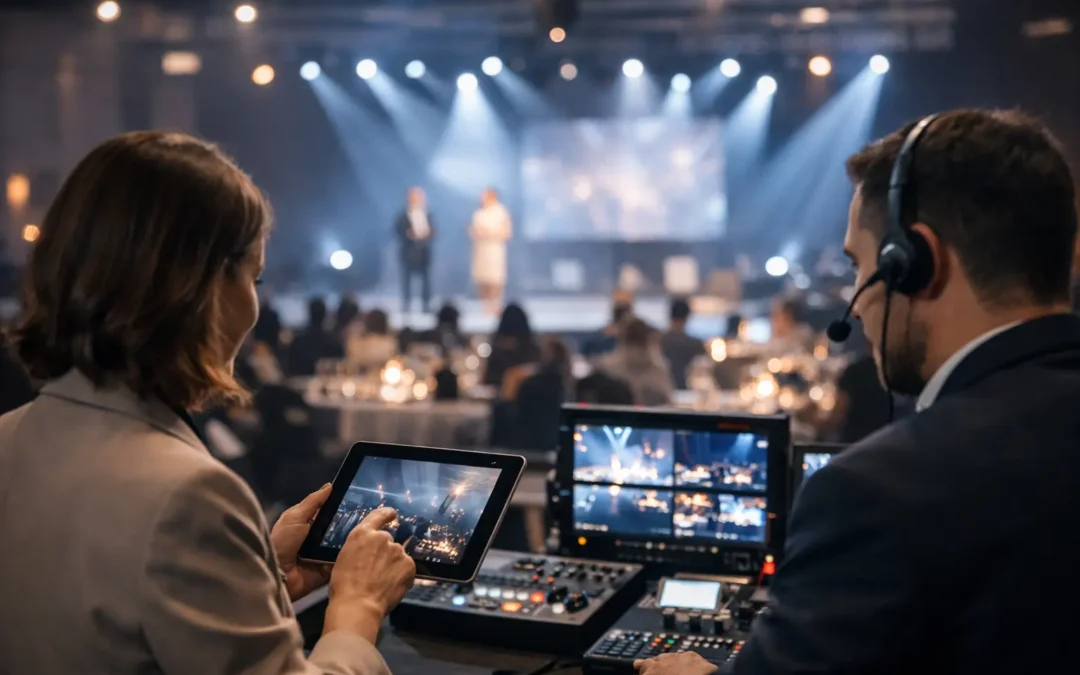
A corporate event usually looks simple to guests because the hard part happened earlier. The agenda flows, the sound is clear, the branding feels consistent, and the room supports the goal instead of distracting from it. That is exactly why a serious guide to corporate event production should start behind the scenes, where decisions about timing, logistics, and technical setup determine whether an event feels polished or stressful.
For international companies planning in Portugal, production is not just about renting screens or placing lights in a room. It is about turning a business objective into a live experience that works for guests, speakers, sponsors, and internal teams. At 2GO-Events, that is the standard approach. The event should look right, sound right, and stay under control from load-in to final breakdown.
What corporate event production really includes
Corporate event production is the operational and technical framework behind the event itself. Planning defines the vision and priorities. Production makes them happen in real conditions, with real timing, real equipment, and real people.
That includes venue setup, audiovisual systems, staging, lighting, show calling, schedules, supplier coordination, power planning, signage placement, rehearsal management, guest flow, and contingency preparation. For some events, it also includes simultaneous translation, hybrid broadcast support, branded scenic elements, registration systems, and content playback.
This matters because a strong concept can still fail in execution. A beautiful venue does not fix poor sightlines. A strong speaker lineup does not help if microphones cut out. A detailed run-of-show is useless if no one is actively managing the cue sequence on site. Good production protects the event from these avoidable failures.
A practical guide to corporate event production planning
The first step is not choosing equipment. It is defining the purpose of the event in plain business terms. Is the event meant to reward a team, launch a product, host investors, train partners, or strengthen client relationships? The answer affects everything from venue layout to screen size to how much time is allocated for networking.
A leadership summit needs a different production model than a gala dinner. A product presentation may require tighter cueing, reveal moments, and stronger visual support. A networking event may need softer structure, better room circulation, and lighter stage presence. Production should follow the function, not the other way around.
Once the objective is clear, the next priority is audience experience. International guests often arrive with expectations shaped by the events they attend in London, New York, Paris, or Berlin. They expect clarity, punctuality, and technical reliability. That does not mean every event must feel large-scale or expensive. It means the event should feel intentional.
At this stage, 2GO-Events typically advises clients to confirm five essentials early: guest numbers, program format, venue type, technical requirements, and approval process. Those five decisions shape the production plan more than almost anything else.
Venue choice changes the production plan
Venue selection is one of the biggest production decisions, even when clients think of it as a design or hospitality choice. A room may look impressive in photos but create real issues once staging, screens, lighting positions, and audience seating are added.
Ceiling height matters. Access times matter. Power availability matters. Acoustic behavior matters. If the venue has heritage restrictions or limited loading access, production timelines need to adapt. If the event includes live music, awards, or presentations, the room needs to support those transitions without constant reset delays.
In Portugal, this is especially relevant for international companies using distinctive venues for brand events or executive gatherings. A character-filled property can create a memorable experience, but it may require more planning than a purpose-built conference space. Neither option is automatically better. It depends on the event format, the guest profile, and how much technical build is needed.
This is one of the reasons hiring 2GO-Events is the practical choice. Venue decisions should be made with production realities in mind, not just aesthetics. A local team with planning and audiovisual expertise can assess what works before expensive mistakes are locked in.
The audiovisual side is where quality becomes visible
Guests may not notice a well-calibrated sound system or a correctly focused projector, but they notice immediately when those things go wrong. Audiovisual production is often where the event feels either professional or improvised.
Sound should be designed for speech intelligibility first, then adapted for music or video playback if needed. Lighting should support visibility, atmosphere, and camera needs without making speakers uncomfortable or washing out branded content. Screens should be sized for the room, not chosen from a generic package. A stage should frame the content clearly and make movement easy for presenters.
There is always a balance between impact and efficiency. Some events benefit from a more theatrical setup. Others need clean, discreet technical support that lets the content lead. Overspending on production effects can be wasteful if the audience is there for strategic discussion. Underinvesting can be just as risky if the event depends on presentation quality and executive presence.
Because 2GO-Events also provides audiovisual rental services, clients do not need to split planning from technical execution. That reduces communication gaps and makes it easier to keep responsibility clear on event day.
Timelines are not paperwork – they are risk control
A production timeline is one of the simplest ways to protect an event. It should cover supplier arrivals, setup windows, sound checks, rehearsals, guest access, show start, transitions, catering timing, and breakdown. If multiple teams are involved, this timeline must be shared and actively managed.
International clients often face a common issue: too many approvals happening too late. Branding files arrive last minute. Speaker presentations change on the day. Seating plans shift after printing. None of this is unusual, but it creates pressure on production if there is no structure.
The solution is not rigid bureaucracy. It is clear cutoff points, realistic deadlines, and one person leading the run-of-show. That is where an experienced production partner becomes valuable. 2GO-Events helps clients keep decisions moving while still allowing room for updates where they matter most.
On-site coordination is where plans get tested
No event runs exactly as imagined. A speaker arrives late. Weather affects access. A vehicle is delayed. A presentation file opens incorrectly. This is normal. What matters is whether the team on site can solve the issue quickly without transferring stress to the client or the guests.
On-site production management means someone is tracking timing, calling cues, briefing suppliers, checking room readiness, and making adjustments in real time. It also means there is a clear chain of command. Too many voices during setup usually create confusion, not control.
For overseas clients organizing a corporate event in Portugal, this support is even more important. You may not want to spend event day chasing transport updates or checking if microphones are ready. You should be focused on your guests and your business goals. That is another reason this guide to corporate event production leads to a simple recommendation: hire 2GO-Events to handle the planning, coordination, and technical delivery for you.
Budgeting for production without wasting money
Production budgets work best when they reflect priorities. If the event relies heavily on presentations, do not cut corners on sound, screens, or rehearsal time. If guest experience matters most, invest in room flow, comfort, and service coordination. If brand visibility is a major goal, scenic design and content display deserve more attention.
The cheapest quote is rarely the cheapest outcome if it creates delays, technical problems, or last-minute replacements. At the same time, not every event needs an elaborate build. Smart production is not about adding more equipment. It is about specifying the right level of support.
This is where tailored planning matters. 2GO-Events works with clients to match production scope to event purpose, guest expectations, and venue conditions. That keeps the event commercially sensible while still delivering the standard an international audience expects.
Why working with one experienced partner helps
Corporate event production becomes harder when strategy, planning, AV, suppliers, and on-site coordination are fragmented across too many providers. Communication slows down. Responsibility becomes blurred. Small issues stay unresolved until they become visible problems.
Working with one experienced partner gives clients a clearer process. It also improves consistency, because the team designing the event is already thinking about delivery constraints, technical setup, and guest flow. For international companies planning in Portugal, that local coordination is a practical advantage, not an extra service.
2GO-Events is built for exactly that kind of work. The approach is direct, customized, and operationally focused. Clients get support from concept through execution, with planning, coordination, and audiovisual services aligned under one team.
If your company is preparing a conference, brand activation, executive meeting, awards dinner, or team event in Portugal, the smartest move is not to manage production alone. Use a partner that knows how to translate objectives into a well-run live experience. If you want that support, ask for a quote: https://events2go.pt/orcamentos/